At SeedMaster, we’re dedicated to helping farmers maximize their potential for a more profitable future by providing them with the innovative tools they need. We have a strong commitment to integrity and innovation in all that we do, and it shows in every product we develop. That’s why we build the lowest-maintenance seeding systems on the market, so that every farmer can grow with confidence.

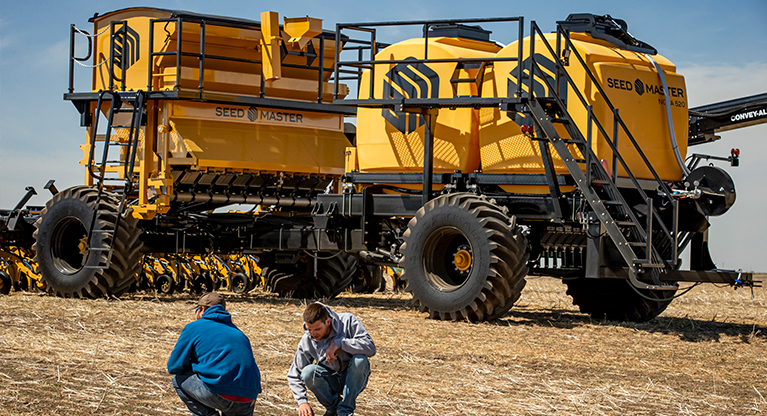
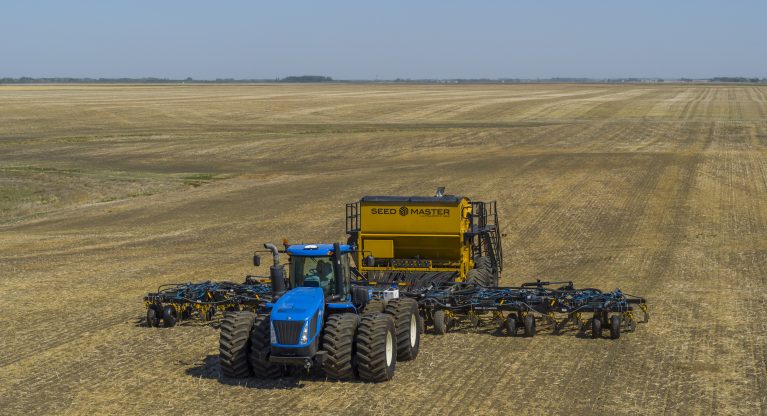
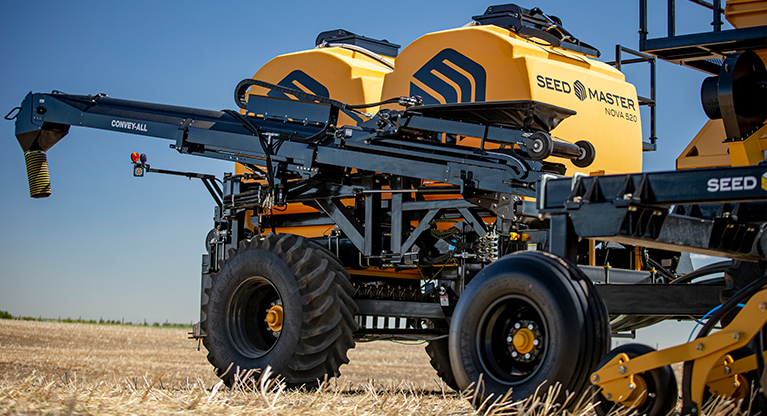
This dedication is what motivated us to develop terrain-following openers that place seed and fertilizer with pinpoint precision. It’s why we engineered the largest air drills in North America—up to 100 feet wide—so you can seed more acres per day. It also led us to build the most advanced tanks and metering systems available—allowing you to achieve near-singulation accuracy down the row, and easily apply high rates of fertilizer on large drills.Our lineup offers a range of onboard, tow-behind, or tow-between tank systems, drill widths, and row spacing options. No matter what you grow, SeedMaster has the ultimate seeding solutions for better crops and bigger profits.

SAVE UP TO $40 PER ACRE

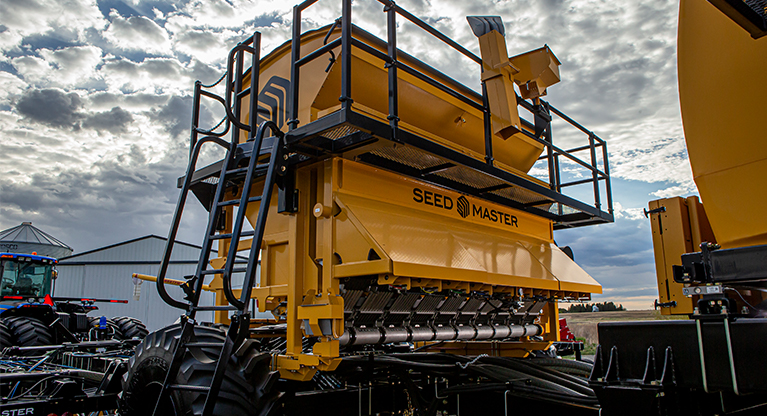
Cutting costs without sacrificing yield or profitability is a goal for every farmer. SeedMaster helps deliver this with the combined savings generated with UltraPro™ on-frame tanks and Overlap Control.

Third-party research, combined with our own cost-saving analysis, shows the total input savings from an UltraPro system with Overlap Control can save up to $40 per acre on canola crops. With savings like that, it’s easy to see why progressive farmers choose SeedMaster.

Complete Seeding System

GROUNDED IN AGRONOMY

The SeedMaster advantage is built on solid agronomic principles that support precision seed placement, optimum sideband fertilizer placement, accurate seed metering, and improved residue clearance. Together, these solutions are able to deliver better crops, greater profitability, and more sustainable practices.

TOP SCIENTIFIC RESEARCH

SeedMaster is proud to work with top agronomic research scientists across Western Canada and the small-grains belt of the USA. This research includes plot drills equipped with SeedMaster openers and the UltraPro metering system, and wide-row spacing trials conducted by the Indian Head Agricultural Research Foundation (IHARF).

Seeding between the rows

SEEDING BETWEEN THE ROWS

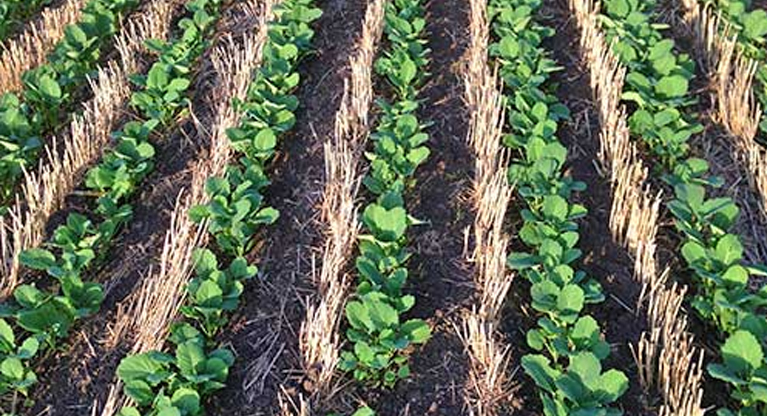
Research in prairie climates has shown that yields are higher when standing cereal stubble is left at an increased height. Seeding between the rows is the best way to take advantage of stubble height and the benefits of increased moisture retention.


AGRONOMIC INSIGHTS

Nova Series II Air Cart

SEED AND FERTILIZER PLACEMENT

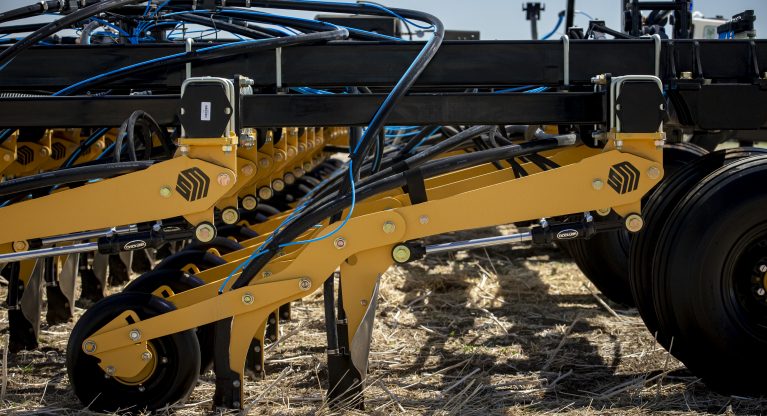
Maintaining adequate seed and fertilizer separation is necessary to avoid seedling damage from fertilizer. Alberta’s AgTech Centre found that SeedMaster’s opener system provided very good seed and fertilizer separation, while also improving weed control by giving crops preferential access to nutrients.

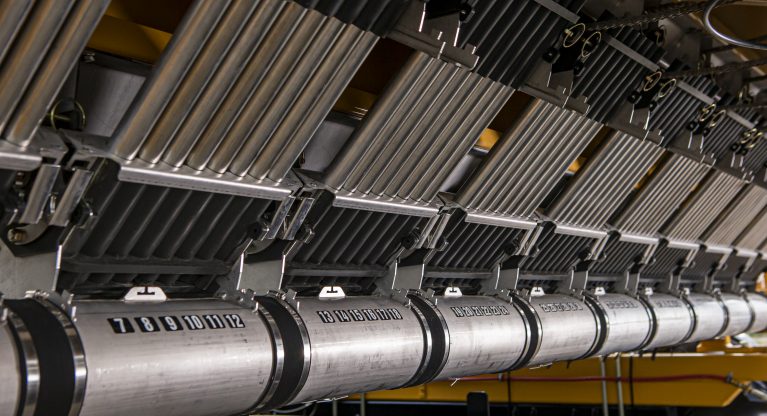
UltraPro II Metering System

CANOLA UNIFORMITY

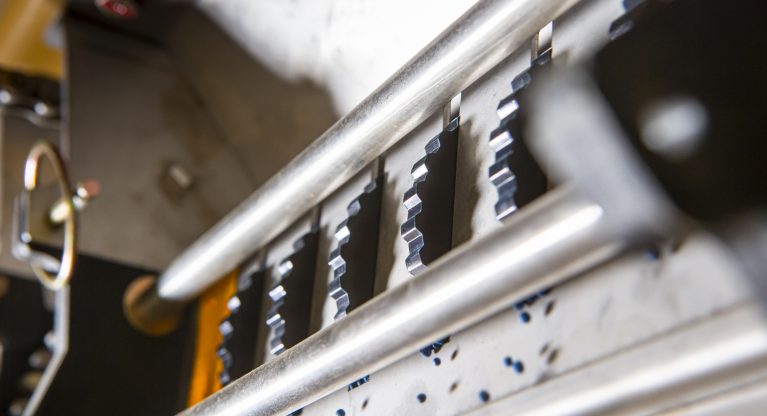
According to the Canola Council of Canada, non-uniform stands can reduce yields by up to 20 percent. Uniform stands benefit growers by providing uniform crop staging for both pesticide applications and harvest management. Plant stand uniformity is most important when seeding rates are reduced and growers can expect the best results by planting evenly spaced seeds at a shallow, uniform depth. A SeedMaster seeding system equipped with an UltraPro meter delivers very uniform plant stands due to near-singulation seed metering, individual row distribution and precise seed and fertilizer placement.

Openers

BLACK STRIP

Spring soil temperatures in no-till systems are slightly cooler (<0.5°C) than tilled soils. There are two main practices to manage this: leaving a blackened seed row, and shallow seeding. The soil temperature in the black soil strip left behind after using knife openers is warmer than what is found after using disc openers. In no-till, spring soil temperatures are warmer at shallower depths. The SeedMaster opener precisely places seed and fertilizer close to the soil surface and leaves a blackened strip above the seedrow that warms up more quickly.